Visibility by Design: Putting Fair Fashion Stores on the Map
Connecting fair fashion suppliers with their customers by building a social platform.
Role:
UX/UI Design
Field:
Fair Fashion
Duration:
4 months
Challenges
In my bachelor thesis about fair fashion, I combined secondary research and a survey to define the challenges I needed to face in this project. Keep in mind it was done in 2020: Greta Thunberg was all over the news and Fridays for Future demonstrations were big, not only in Germany, but all over the world. Meaning: The public focused on trying to solve climate issues. The fast fashion industry is second biggest industry impacting the climate negatively. Back then I started to get into fair fashion and noticed the difficulty to find out where I could shop fair fashion clothes. This led to my interest in finding a solution to this problem.
My user survey confirmed my own experiences:
42% of respondents found stores by accident, highlighting the challenge of planning shopping trips
74% of respondents found it difficult to find fair fashion stores
Additionally, Covid happened that year, endangering countless small businesses. So the big challenge was to create more visibility for small fair fashion shops.
Approach
Discovery
In preparation to this project, I found out that 61% of the survey participants search for fair fashion and secondhand shops by searching for the term “fair fashion” on Google Maps or similar map apps. Several reasons – such as bad SEO or no online presence at all – lead to lots of shops not being found by their target group. That means not only possible customers, but also shops can benefit from greatly from a digital fair fashion solution.
Definition
To define the target group, I created three categories of users: the idealist, the minimalist and the selected vintage lover. Despite having very different motivations to shop vintage or fair – the app meets the users' needs by providing detailed information about fair and vintage fashion in the user's environment.
In 2020 I found two possible competitors that focused on presenting fair fashion brands and providing links to their online shops. My concept would differ from it a lot, focusing on advertising local shopping.
Ideation
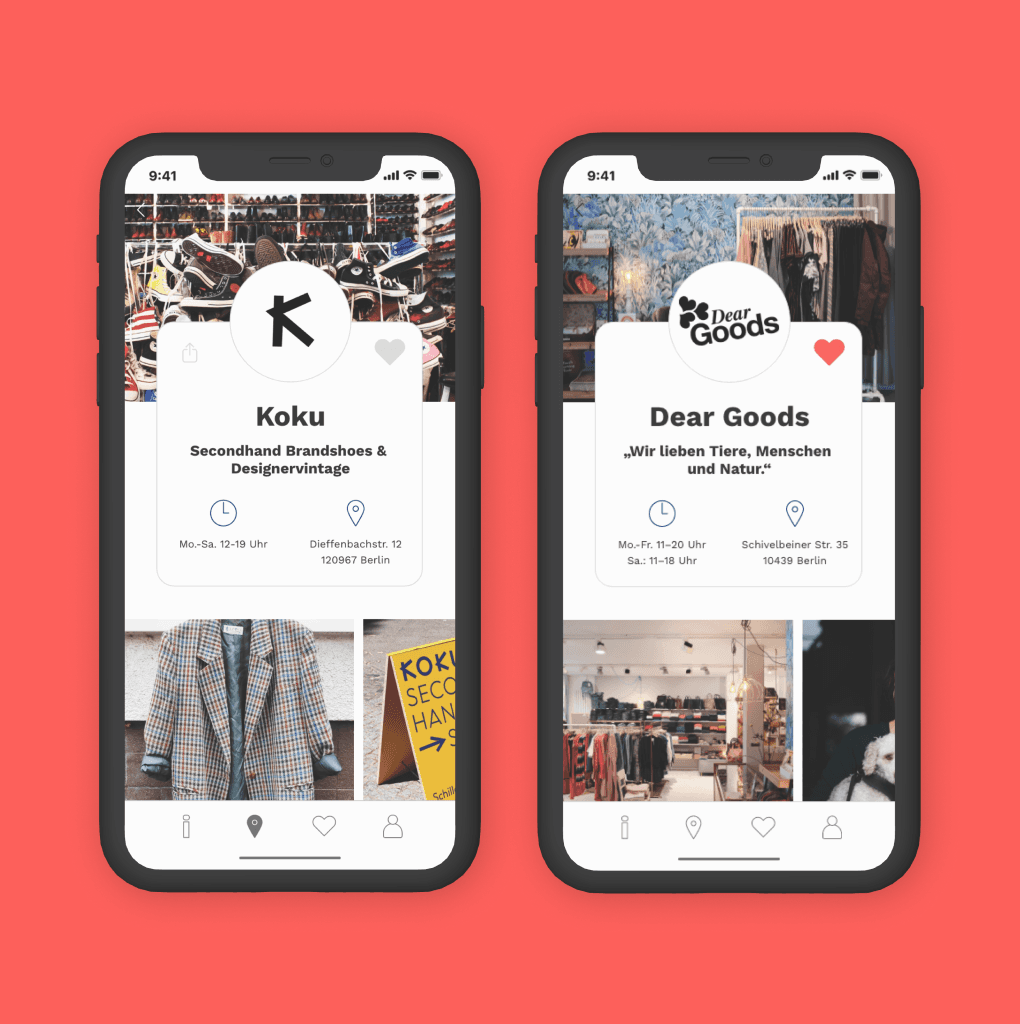
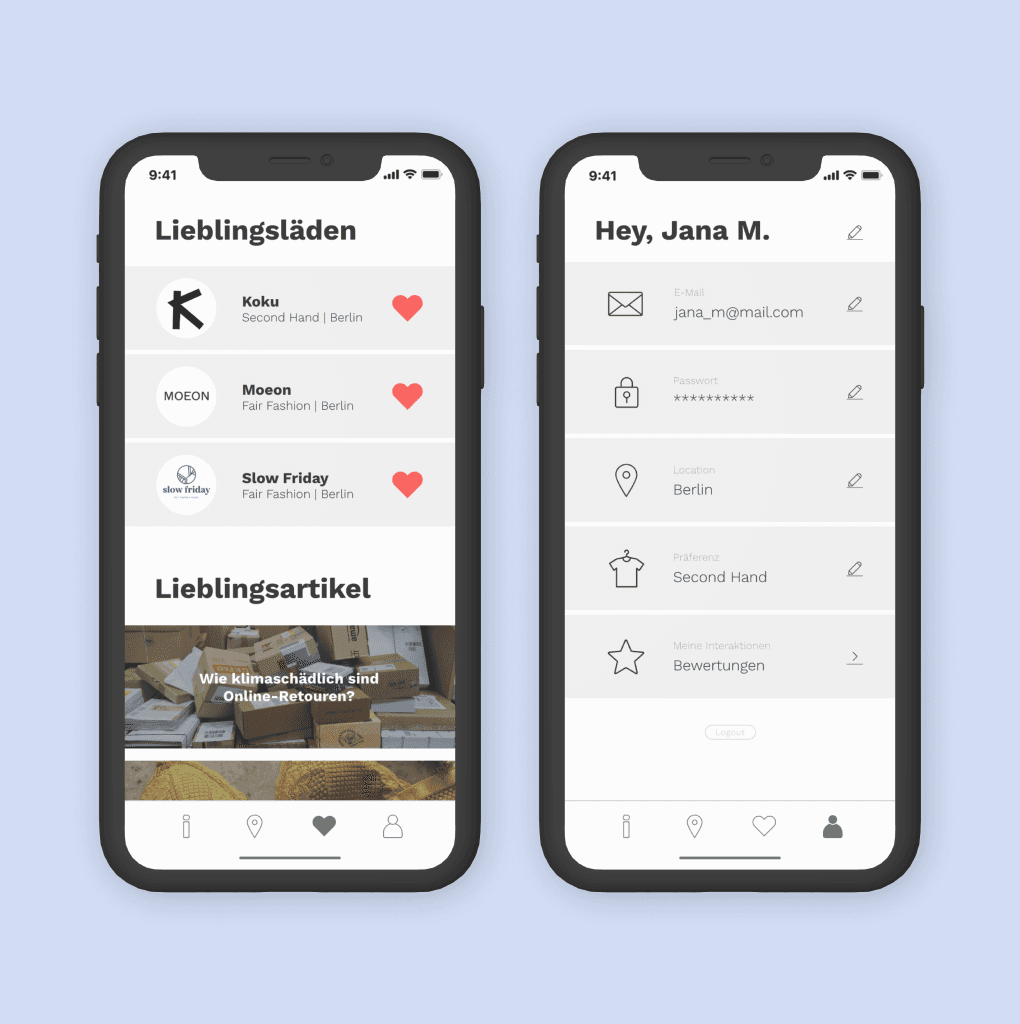
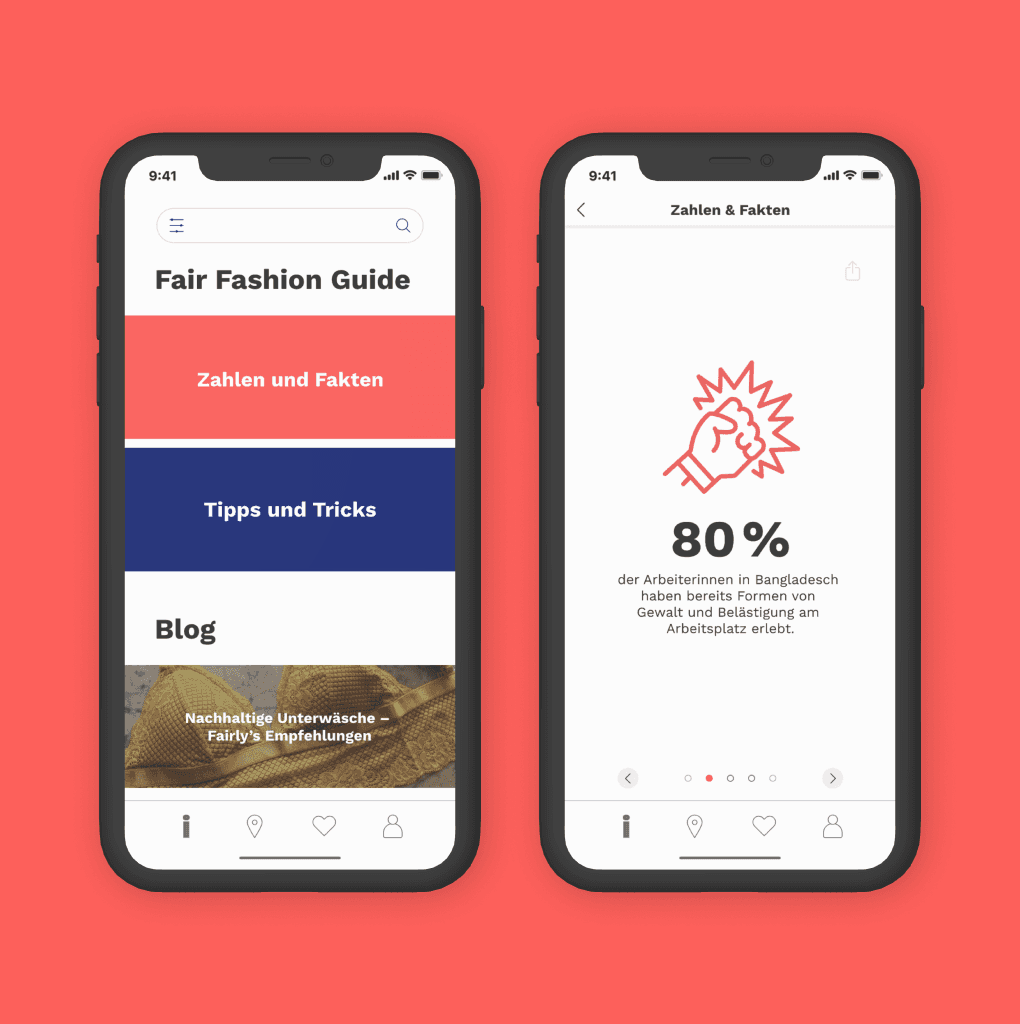
Highlighting the focus on local fair shopping, it was very important to include a map as the main feature of the app. Following the user flow, it became obvious that every shop needed to have a profile with important information that would help possible customers to decide where to shop. Providing information about fair fashion and its environmental impact happens via an info section. There, users can choose to get a quick overview by clicking through facts and figures. Or to dive deeper into the topic by reading the blog articles.
Design
On one hand, 84% of survey participants associate Green with sustainable fashion. On the other hand, most of the fair fashion brands I researched, use Black and White as their main brand colors. To communicate the unique concept of the app and to make clear that it's not a fashion brand, I created a color palette that would stand out against competitors.
Conclusion
The app "Fairly" offers a solution to the challenges of finding ethical fashion by creating an online network that connects customers and shops through map searches and detailed shop profiles. This eliminates the need for time-consuming research, allowing users to find shops that match their needs quickly and easily. Additionally, the app provides educational content about the fair fashion industry, helping users make informed choices. By combining practical tools with valuable information, Fairly makes ethical fashion more accessible and convenient.